
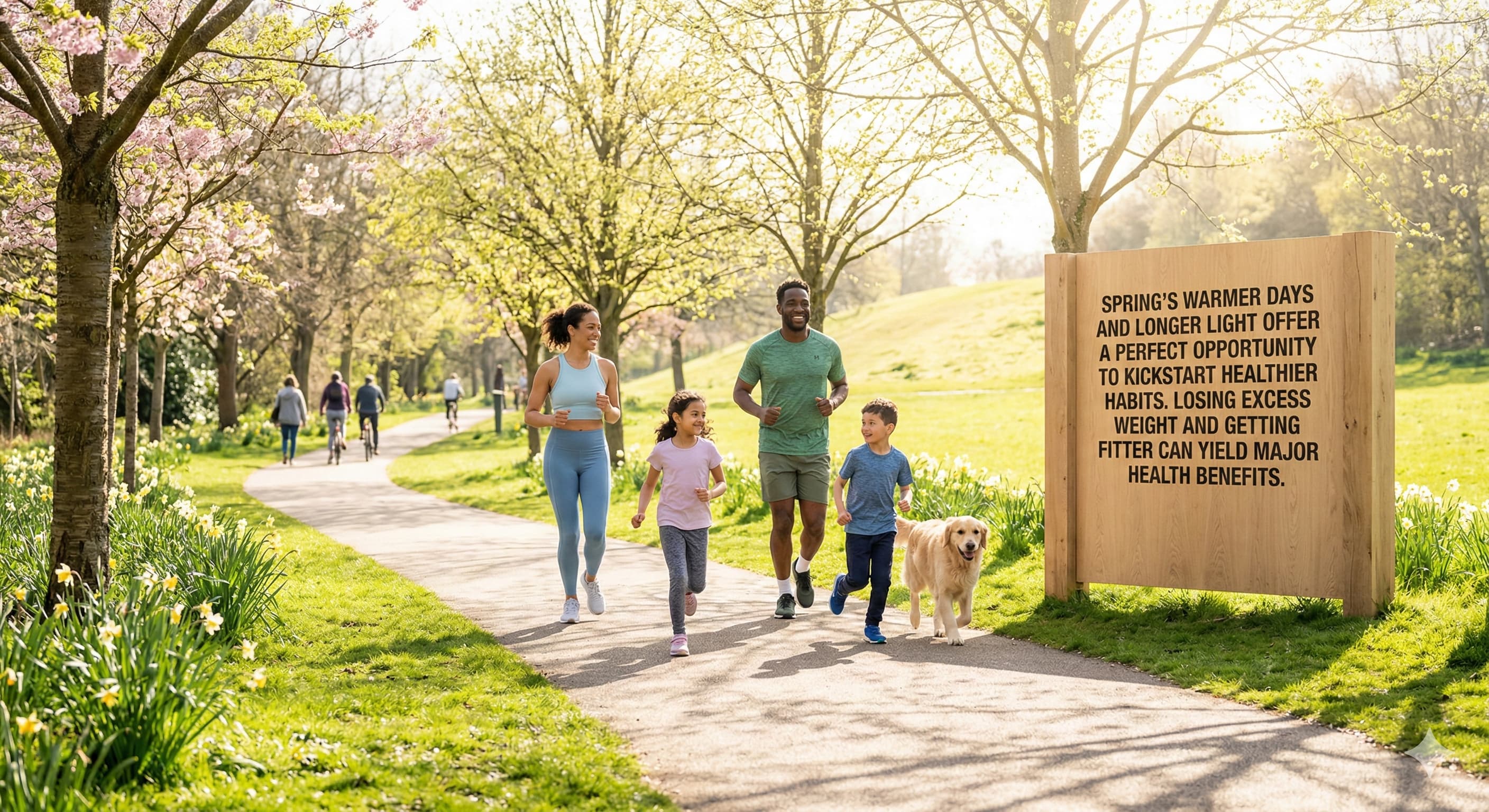
Spring’s warmer days and longer light offer a perfect opportunity to kickstart healthier habits. Losing excess weight and getting fitter can yield major health benefits – the NHS notes that even modest weight loss lowers the risk of high blood pressure, heart disease and type 2 diabetes. In England, about 64% of adults are now overweight or obese, with roughly 26% obese, so many people can benefit. By setting gradual goals and following proven advice, you can slim down and tone up safely as nature springs to life.
Weight Loss: Healthy Diet & Habits
The first step to weight loss is setting realistic, sustainable goals. Health experts advise aiming for a loss of about 0.5–1 kg (1–2 lbs) per week, which typically means reducing intake by around 600 kcal per day. Rapid crash diets usually backfire, so the NHS recommends gradual changes to your eating and drinking habits. For example, cutting out sugary drinks in favor of water (add lemon for flavor if you like) and starting the day with wholegrain cereal instead of sugary versions are simple swaps that pay off.
Eating a balanced, nutrient-rich diet is key. The NHS and WHO both emphasize plant-rich meals: fill about half your plate with vegetables, and include fruits to hit 5 portions a day. Fiber-packed veggies and fruits are low in calories and help you feel full. Always include a source of lean protein (such as beans, fish, eggs or chicken) in each meal to boost satiety. Opt for whole grains over refined carbs – the NHS advises keeping starchy carbs (bread, rice, pasta) to no more than a third of your daily intake and choosing wholegrain versions. Healthy fats are fine in moderation: prefer unsaturated oils (olive, sunflower) and low-fat dairy. WHO guidelines suggest limiting free sugars to less than 10% of your daily calories (about 50g per day), since excess sugar contributes to weight gain.
A colorful salad of greens, lean protein and whole grains can fill you up on fewer calories. Including such meals aligns with healthy-eating guidelines: for example, the NHS recommends making vegetables about half your meal, and WHO advises eating roughly 400g (five portions) of fruits and veggies daily. These high-fiber foods fill you with minimal calories, making it easier to maintain the calorie deficit needed for weight loss. As the WHO notes, a varied, balanced diet low in unhealthy fats, sugars and salt – and rich in unprocessed plant foods – is the foundation of good health.
Portion control makes a big difference. Use smaller plates and bowls to visually trick your mind into thinking you have a full meal. Measure oil, butter or spreads with a teaspoon to use less, and serve your own portion so you’re aware of how much you eat. Stop eating when you feel satisfied – the NHS even advises saving leftovers for later instead of finishing your plate out of habit. Eating mindfully (turn off the TV and focus on your food) can prevent overeating. If needed, a simple digital food scale can help you weigh ingredients and stick to recommended serving sizes.
Tracking and support also help. The NHS offers a free 12-week “Weight Loss Plan” app that guides you through goal-setting, meal planning and activity tracking. Many people find success by counting calories using apps like MyFitnessPal (free, with premium options) to ensure they don’t eat more than they burn. Checking food labels for lower fat/sugar content, and aiming for more “green” (healthier) options, is also recommended. Sharing your plan with a friend or support group can boost motivation and accountability.
Getting Active for Weight Loss
Diet and exercise go hand-in-hand. Current UK guidelines say 150 minutes of moderate-intensity activity per week is a good goal (for example, 5×30-minute brisk walks). The WHO elaborates: adults should do 150–300 minutes of moderate exercise (or 75–150 minutes of vigorous exercise) each week. Even short bursts count (the BHF notes every 10 minutes matters). In practice, try to move daily – take the stairs, park further away, or walk the dog longer.
Regular activity not only burns calories but also improves body composition. A review of multiple studies found that exercise training led to significant weight loss (about 1.5–3.5 kg on average) and fat loss in overweight adults. Strength training is important too: lifting weights or doing bodyweight exercises a couple of days a week helps preserve muscle while you lose fat. The WHO explicitly recommends muscle-strengthening exercises involving all major muscle groups on at least 2 days per week. Examples include lifting dumbbells, resistance-band workouts, yoga, or even heavy gardening tasks. Preserving muscle is key because it keeps your metabolism higher as you slim down.
Springtime Motivation and Outdoor Tips
With longer, brighter days ahead, spring is ideal for outdoor exercise. The British Heart Foundation notes that warm, daylight evenings make it perfect to get active outside. Aim for at least 30 minutes of moderate activity on most days – brisk walks in local parks or along the canal are a great start. Walking outside boosts mood, reduces stress (through “feel-good” hormones) and burns calories. Cycling and even gardening can be counted: the BHF specifically highlights gardening as beneficial for confidence and stress relief. If you feel more adventurous, try hiking local hills or a countryside trek with friends – you’ll burn extra energy on varied terrain.
Outdoor workouts have extra perks: fresh air energizes you, and sunlight helps vitamin D production, which is important for bone health. The varied terrain and weather challenges also make your body work harder than on a flat treadmill. Whenever you exercise outside, just remember to warm up properly and listen to your body (check with a doctor if you have any health concerns). Even if weather is fickle, a quick jog with waterproof layers or an indoor exercise video from the NHS Fitness Studio can keep you on track.
Recommended Weight-Loss Products & Programs
- Healthy Cookware: An air-fryer or grill (e.g. Cosori Air Fryer) lets you cook foods crispy with little or no oil. A non-stick saucepan and slow cooker are also great for low-fat meals.
- Portion Control Tools: Special portion-control plates and bowls help limit servings (search Amazon or CJ for models). Even simple measuring cups/spoons or a digital kitchen scale (like Etekcity Food Scale) are invaluable for calorie counting.
- Hydration Aids: A large water bottle with time markers (e.g. HidrateSpark) encourages you to drink more. Swapping soda for water or unsweetened tea cuts calories immediately.
- Kitchen Gadgets: A blender/smoothie maker (NutriBullet, Vitamix) helps make healthy smoothies or soups. Meal-prep containers allow portioned lunches on busy days.
- Healthy Meal Services: Consider a meal-kit subscription (HelloFresh, Gousto) with diet-friendly recipes. These often have affiliate programs (e.g. CJ Affiliate) and take the guesswork out of cooking balanced meals.
- Dietary Supplements: While not magic, protein powder (whey or plant-based) can boost protein intake and satiety. Some people use green tea or sliming teas (e.g. “All Day Slimming Tea” on ClickBank) or fiber supplements to curb appetite – use with caution and check reviews.
- Fitness Tracker: A fitness band or smartwatch (Fitbit, Garmin, etc.) helps track steps, workouts and even food/calories. Knowing your daily activity can motivate you to move more (150 min/week target).
- Apps & Digital Programs: Besides the free NHS Weight Loss Plan app, apps like MyFitnessPal track calories and exercise. Popular structured programs include Slimming World and WW (WeightWatchers) (both CJ affiliate programs in the UK) or Joe Wicks’ Body Coach app. Beachbody’s 21 Day Fix or similar online courses (often on ClickBank) offer guided workouts and meal plans.
- Recipes & Books: Healthy-cooking cookbooks or eBooks can inspire you. Look for titles like Healthy Meal Prep or Spring Clean Your Diet (affiliate links on Amazon).
- Support & Community: Joining a weight-loss group (online or local) can help keep you motivated. Many services like Slimming World have Facebook communities or local branches. The NHS also links to free programs (e.g. FIT FANS football weight-loss program).
Use these tools to complement your healthy eating: for example, filling an air-fryer basket with veggies or lean protein, then tracking the calories on an app, can turn healthy habits into automatic routines. And remember: small changes add up. Even swapping one sugary snack for fruit per day can produce real results over a month.